
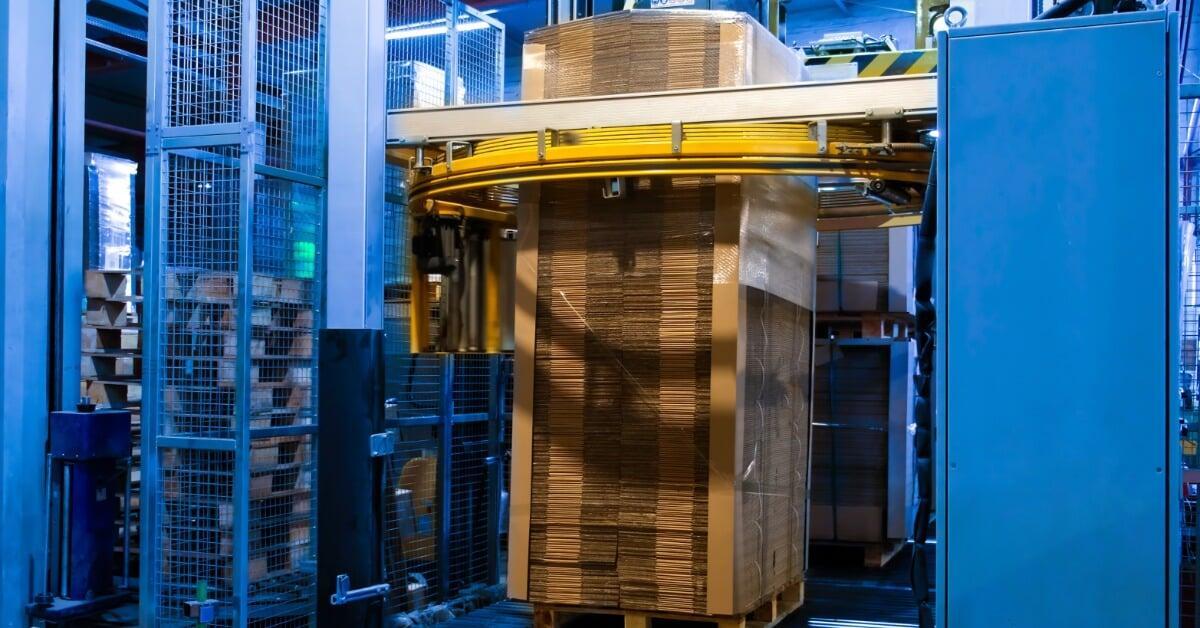
Warehouse managers monitor labor costs, freight damage, and outbound efficiency every day. Pallet wrapping directly influences all three, yet many operations still rely on manual processes that introduce variability and waste. Stretch wrap machines are worth the investment because they help protect products, improve workflow, and more.
Stronger Load Containment Reduces Product Damage
Manual wrapping creates an inconsistent containment force because each employee applies film with a different level of tension and overlap. Those small variations leave weak points throughout the load, especially at corners and in the upper layers. When a pallet encounters vibration, braking, or sudden shifts in transit, those weak areas allow cartons to move and compromise overall stability.
Stronger, uniform containment keeps the load square from dock to destination. Consistent tension secures cartons tightly together, reducing internal movement and limiting the risk of crushed corners or collapsed stacks. As containment improves, freight damage decreases, and replacement costs drop.
Reduced Freight Claims Improve Cost Control
Even a modest reduction in damage rates produces measurable savings across high-volume operations. Fewer claims also reduce administrative time spent investigating disputes, which further improves operational efficiency.
Reduced Film Waste Lowers Material Costs
Hand wrapping often leads employees to apply extra layers to compensate for uneven tension and weak containment. Those additional wraps increase film consumption without delivering stronger load stability. Over time, excessive usage drives up monthly supply expenses and reduces cost control.
Controlled application ensures the film stretches to its engineered capacity before it secures the load. Proper stretch maximizes containment force while reducing the total amount of material required per pallet. Operations achieve stronger performance using fewer wraps.
Lower film consumption creates measurable savings across high-volume facilities. Consistent usage rates also improve purchasing accuracy and simplify inventory forecasting. When material use becomes predictable, budget planning becomes far more reliable.
Faster Wrapping Increases Throughput
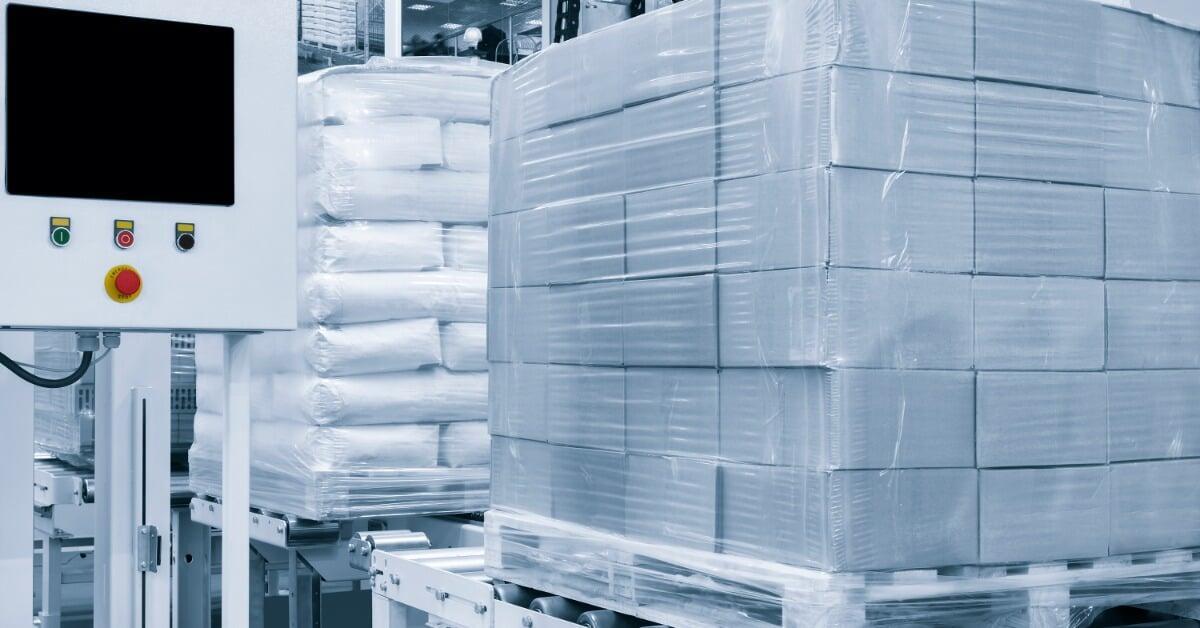
Manual wrapping slows outbound operations because employees must circle each pallet several times to apply sufficient film. As order volume increases, that time commitment compounds and begins to restrict dock efficiency. When containment cannot keep pace with picking and staging, pallets accumulate, creating congestion in outbound lanes.
Consistent mechanical wrapping removes that variability from the process. Reliable cycle times allow managers to plan dock activity more accurately and keep pallets moving without interruption. As throughput stabilizes, forklifts spend less time waiting and more time loading.
Improved containment speed strengthens overall shift productivity. When wrapping supports production instead of slowing it down, the entire outbound workflow operates more efficiently.
Lower Labor Requirements Reduce Operating Costs
Manual pallet wrapping consumes labor hours that you could allocate to higher-value warehouse functions. Employees must stop picking or staging to complete repetitive containment tasks, which fragments workflow and reduces overall productivity. As volume increases, the time requirement grows, forcing managers to dedicate more labor strictly to wrapping.
Reducing hands-on wrapping time allows operations to redeploy employees to roles that directly impact accuracy and throughput. Instead of spending hours circling pallets, teams can focus on order verification, staging efficiency, and dock coordination. That shift increases output without immediately increasing headcount.
As wage rates continue to rise, every hour of manual labor carries greater financial weight. Lower reliance on repetitive wrapping tasks improves cost control and strengthens long-term operating stability.
Reduced Injury Risk Lowers Workers’ Compensation Costs
Stretch wrap machines are worth the investment because it helps keep workers safe. Hand wrapping forces employees to bend, twist, and circle pallets repeatedly throughout each shift. These repetitive movements strain the lower back, shoulders, and knees, especially in high-volume environments. Over time, physical stress can increase the risk of musculoskeletal injuries.
Workplace injuries create immediate operational disruption. Managers must adjust schedules, reassign responsibilities, and absorb rising workers’ compensation expenses, all while maintaining production targets. Even minor strains reduce shift efficiency and place additional pressure on remaining team members.
Limiting repetitive motion directly reduces that exposure and protects workforce capacity. When wrapping no longer contributes to strain-related injuries, operations experience fewer unexpected absences and less schedule volatility. Over time, lower injury frequency stabilizes labor planning and reduces long-term compensation costs.
Consistent Wrap Quality Improves Load Performance
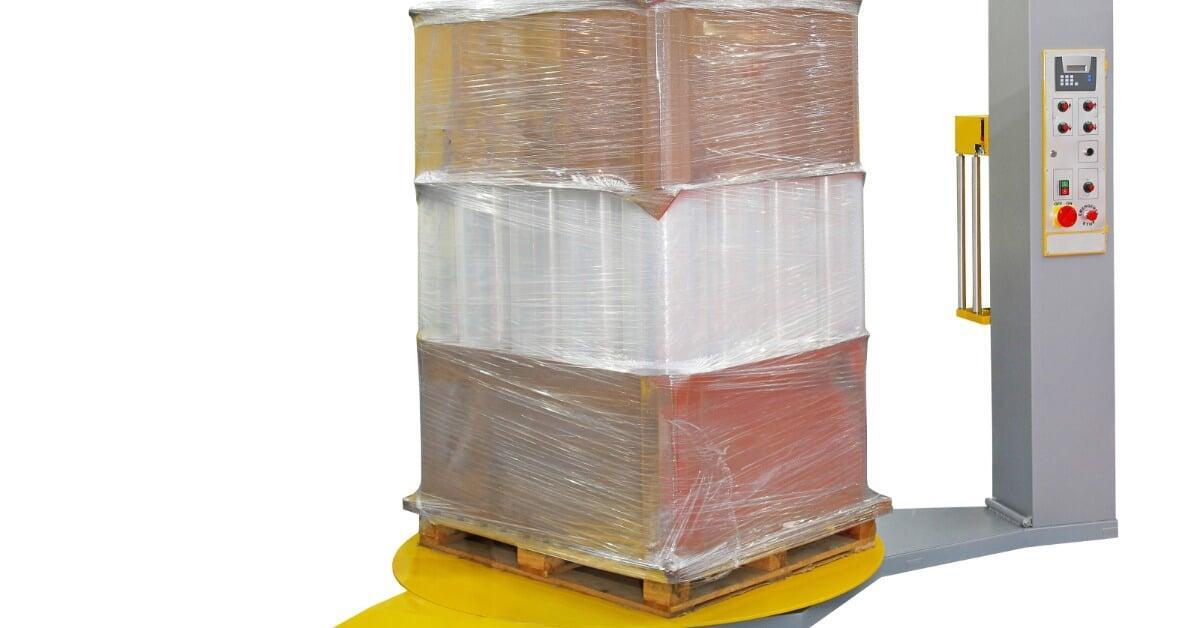
Different employees apply film with varying techniques and levels of tension. Some focus heavily on the base of the pallet while others overlook top coverage or corner reinforcement. This inconsistency creates unpredictable containment strength and increases the risk of load failure during transit.
A stretch wrapper standardizes the application process across every shift. Each pallet receives the same programmed containment force, overlap pattern, and coverage from top to bottom. That uniformity eliminates guesswork and reduces performance variation.
Improved consistency reduces rework, minimizes inspection time, and strengthens overall shipment reliability. Supervisors spend less time correcting preventable wrapping issues and more time focusing on operational performance. Standardized containment directly improves load stability across all outbound freight.
Better Film Performance Improves Cost Efficiency
Stretch film generates containment force only when it reaches the proper tension level. When employees apply film inconsistently or too loosely, the load remains vulnerable to shifting, even if they add extra layers. Keep in mind that more material does not equal more strength if the film never activates its engineered holding capacity.
Pre-stretch systems solve that problem by extending the film before it secures the pallet. That controlled stretch increases containment force per inch of material applied and allows the film to perform as designed. Instead of compensating with excess wraps, operations achieve stronger stabilization with less material.
When film reaches optimal performance, each roll secures more pallets and delivers predictable containment strength. Lower material usage, combined with improved stability, reduces the cost per load while limiting exposure to damage. Over time, maximizing film efficiency produces measurable savings across high-volume operations.
Lower Total Cost Per Pallet Over Time
Evaluating wrapping performance requires more than comparing equipment price tags. Managers must calculate the total cost per pallet across labor, materials, safety exposure, and damage risk.
Focusing only on upfront investment ignores the recurring expenses that impact profitability every day. The true cost of wrapping becomes clear when you break it down into the operational expenses that repeat every shift:
- Several operational cost drivers influence long-term wrapping expense:
- Labor hours dedicated to manual pallet wrapping each shift
- Film consumption per load due to inconsistent tension or overwrapping
- Freight damage claims caused by unstable or shifting pallets
- Injury-related costs tied to repetitive motion and strain
- Downtime occurs when wrapping cannot keep pace with production
Each of these factors compounds across daily production volume. A few extra minutes per pallet or a small increase in film usage may seem minor in isolation, but those inefficiencies multiply quickly across hundreds of loads per week. Over time, uncontrolled wrapping costs often exceed the initial investment in automation.
Get Quality Equipment
If your team still relies on manual pallet wrapping, now is the time to evaluate total cost per load. PackSmart helps warehouses assess containment performance and recommend the right equipment for their operation. When pallet wrapping becomes predictable and efficient, the financial impact shows up quickly across every shipment.