
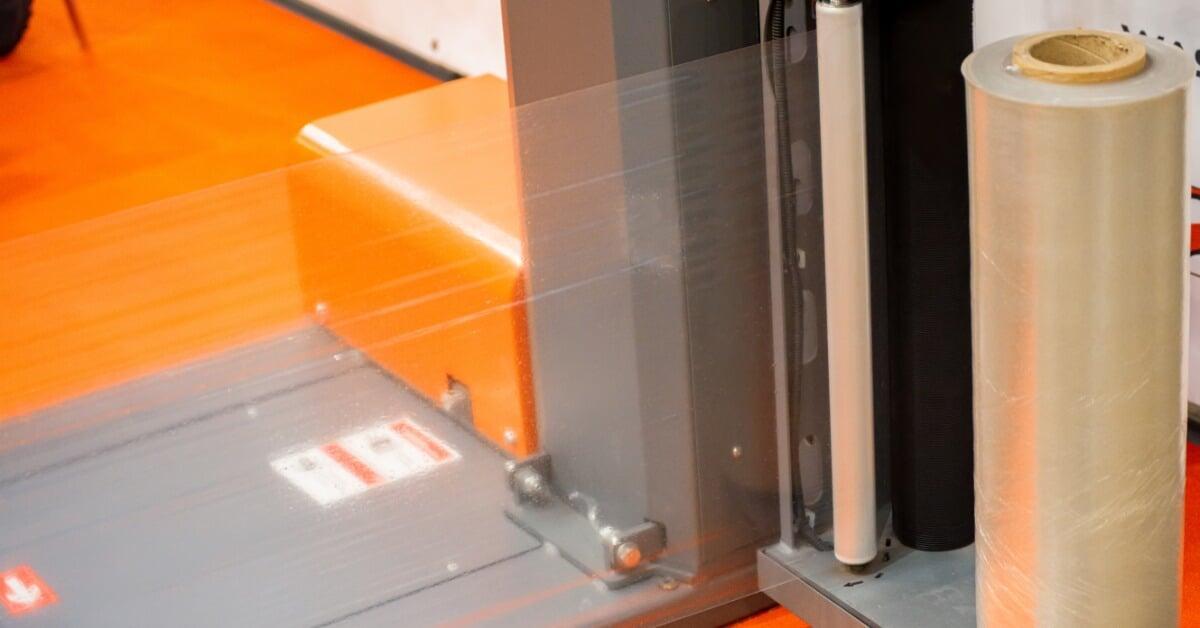
Loads shift, film snaps, and labor hours balloon when the wrapper does not match the workflow. Packaging teams often chase better film or more wraps, yet the mismatch between equipment and load type is the primary driver of most problems. Freight claims rise when operators battle inconsistent containment and slow throughput during peak hours.
Choosing the right wrapper improves containment force, cycle time, and film yield without extra headaches. Allow the experts to explain the different types of stretch wrappers so you can decide what to buy.
Manual Stretch Wrappers
Manual wrapping relies on an operator walking the pallet with a roll or using a handheld dispenser. Small warehouses, seasonal operations, and facilities with low daily pallet counts often start here. Irregular or one-off loads that do not justify setup time also fit this method.
The trade-offs become apparent as volume increases. Operators often struggle to maintain consistent wrap force across layers, creating weak spots and overstretched corners. Fatigue sets in, injury risk rises, and cycle times fluctuate. While manual tools may seem budget-friendly initially, high labor demands and inconsistent load containment can quickly become liabilities as throughput rises beyond modest levels.
Semi-Automatic Turntable Stretch Wrappers
Turntable systems place the pallet on a rotating platform while a vertical film carriage moves up and down. Operators attach the film, start the cycle, and cut the film at the end. The machine controls film tension and wrap pattern, improving containment and repeatability compared to hand wrapping.
Operations teams often select turntables as the first upgrade from manual wrapping, as they provide consistent containment and faster cycle times with minimal training. Pallets with uniform, stable loads stay secure thanks to controlled rotation speeds.
For taller or top-heavy loads that may wobble during rotation, operators adjust ramp-up speed and carriage tension to protect the product. This type of wrapper performs exceptionally well with standard cartons, bagged goods on firm bases, and shrink-bundled cases.
Semi-Automatic Rotary Arm Stretch Wrappers
Rotary arm machines keep the pallet stationary while the arm rotates the film around it. The change solves a significant problem: fragile, tall, or unsteady loads that should not spin. Food and beverage plants, chemical facilities, and operations with mixed-height pallets rely on this style for reliable containment without rotation-induced sway.
The arm applies controlled tension through consistent wrap patterns, reducing the risk of collapse on unstable skids. Operators set film force, pre-stretch, and speed profiles to match each SKU family.
Keep in mind that rotary arms cost more than basic turntables and require a stable floor-mounted base with clear swing zones. However, facilities that ship fragile glass, stacked pails, or high-center-of-gravity pallets often justify the extra control and reduced product damage.
Automatic Stretch Wrappers
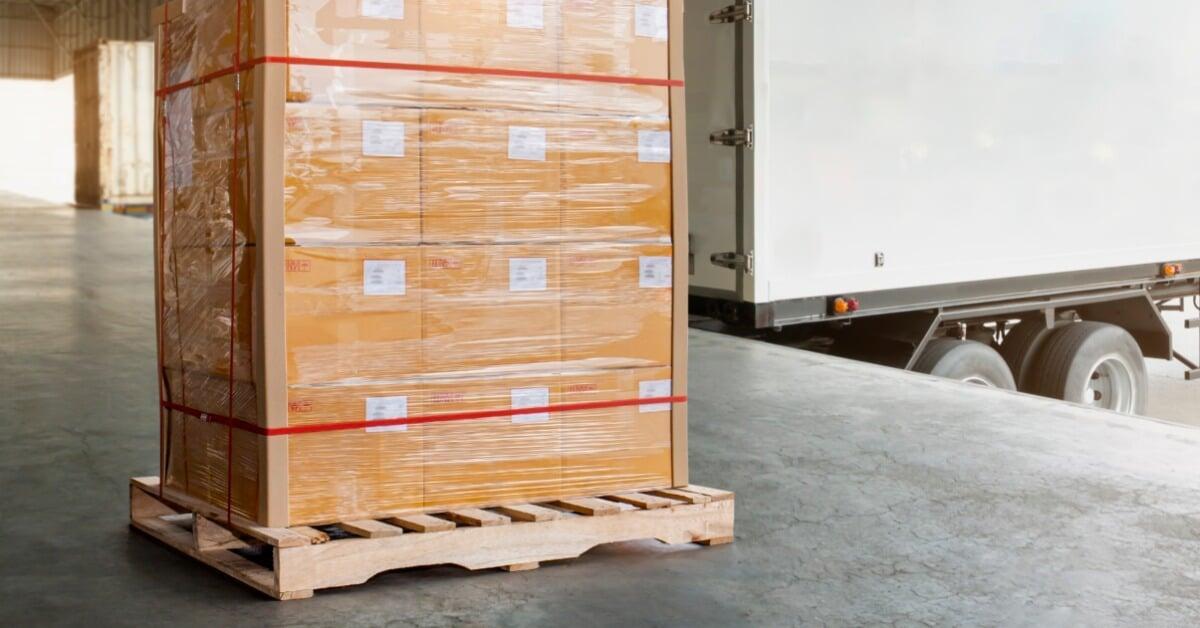
Automatic systems streamline the wrapping process by integrating infeed and outfeed conveyors, automated film threading, and cut-and-seal functions. This allows operators to focus on upstream tasks while the machine handles each cycle from start to finish. In high-throughput environments, these systems provide consistent film application, predictable cycle times, and tight control over film usage.
Moreover, an automatic stretch wrapper ensures precise pre-stretch and containment as the conveyor indexes pallets with minimal stops. However, plants with frequent size changes or irregular traffic patterns may face challenges without strong changeover procedures.
Orbital Stretch Wrappers
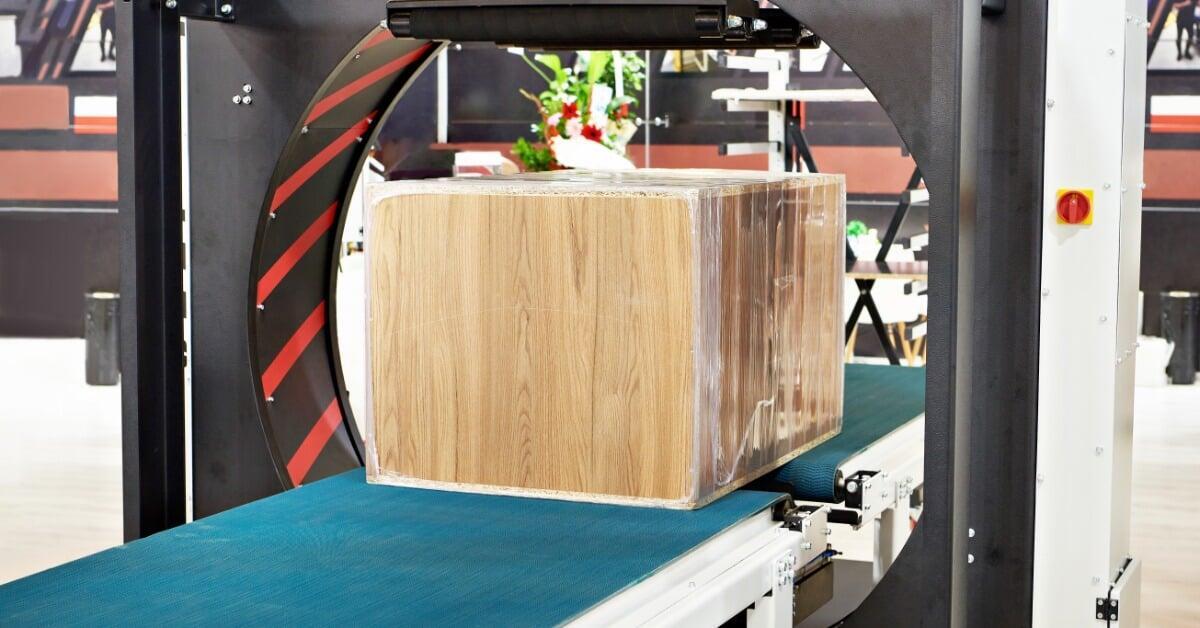
Pallet-based systems aren’t suitable for every product. Long profiles, frames, doors, and lumber require a horizontal wrap path, which orbital machines provide. In this setup, the film carriage spins within a ring while the product passes through the center, creating secure cross-banding along the length of the item.
As a result, fabricators, millwork shops, and extrusion lines can utilize long goods without pallets. The wrap protects surfaces from scuffs and minimizes abrasion during transport and storage. Operators adjust ring speed, conveyor speed, and wrap counts to ensure consistent coverage at key points, such as ends and midsections. These machines also integrate smoothly with roller or belt conveyors that handle awkward shapes and varying lengths.
Rotary Ring Stretch Wrappers
Rotary ring stretch wrappers are another type of stretch wrapper. They deliver high-speed performance on demanding lines. The film carriage rides on a ring that moves up and down while the pallet remains still, enabling lightning-fast film application and precise placement of reinforcement bands. This machine pairs speed with accuracy on heavy industrial loads and fast-moving consumer goods.
Facilities with tight takt times typically install rotary ring systems, where every second counts. The design reduces film overlap waste through accurate starts and finishes at any height. Integration requires solid floors, safety guarding, and coordinated conveyor controls.
Robot or Mobile Stretch Wrappers
Mobile units travel around a stationary pallet while the mast dispenses film at a set tension and height. The operator positions the robot, attaches the film, sets parameters, and lets the unit circle the load. Warehouses with limited space or with outsized pallets, such as machinery crates, use mobile machines for flexible wrapping without a fixed station.
Layout flexibility is one of the most significant benefits of mobile stretch wrappers. The robot wraps the pallet in place, eliminating the need for every load to pass through a fixed station and reducing bottlenecks. Operators still manage setup and film cutoff, while speed settings remain constant. Mobile wrappers are ideal for varied pallet sizes, overflow areas, or remote corners of large facilities where a conveyor line isn’t available.
Straddle Stretch Wrappers
Straddle systems mount the film carriage to a frame spanning a conveyor lane. Pallets move through the wrapper as the carriage rotates around each load, supporting continuous, in-line operation. High-output facilities often pair these machines with print-and-apply systems, in-line scales, and automatic corner board applicators.
Uniform loads move efficiently with minimal operator involvement as the conveyor indexes, and the wrapper follow programmed recipes. Proper setup requires careful layout planning, safety fencing, and coordinated PLC logic with upstream and downstream equipment. Facilities that handle steady volumes and narrow SKU families benefit from a stable, fast, and controlled wrap process optimized for a continuous conveyor line.
Cold Stretch Wrappers
Cold stretch systems apply a mechanically stretched film or a stretch hood without heat. The method reduces energy use compared with shrink systems and improves corner puncture resistance because the film retains elastic memory. Sustainability-focused teams choose this approach to reduce material use, cut energy costs, and maintain strong containment.
Stretch hood applications place a film tube over the pallet and stretch it downward in a controlled motion. The hood grips the pallet base to resist vertical and lateral movement during transit.
Cold stretch systems require precise alignment and consistent pallets, so many facilities retrofit infeed conveyors and pallet stops. This cold-stretch approach works well for beverage trays, bagged resin, and home goods with varying heights.
Choosing the Right Stretch Wrapper
No single wrapper covers every plant’s reality. Load geometry, daily pallet count, floor space, and labor model dictate the best match, and the right choice reduces film usage, damage claims, and cycle variability.
PackSmart sells various types of pallet wrapping machines designed to improve packaging efficiency for a range of production needs. These machines help reduce film waste, speed up throughput, and ensure reliable load containment. Take a closer look at your options and see how the right machine can make a real difference for your operation.