
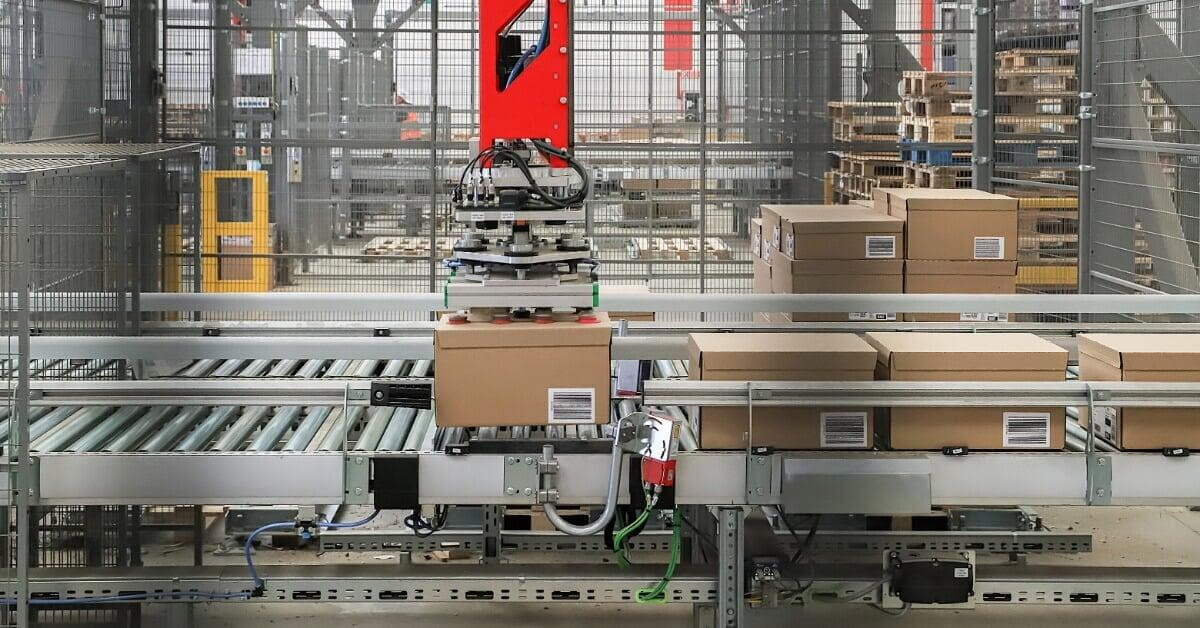
Automated palletizing systems handle repetitive stacking tasks in warehouses and manufacturing facilities, but consistent performance depends on proper equipment settings and maintenance. Misaligned conveyors, inaccurate product placement, and worn components halt production and compromise pallet stability.
Efficient palletizing system operation involves monitoring stacking accuracy and conducting proactive maintenance. Several operational adjustments and maintenance practices contribute to reliable palletizing performance.
Adjust Infeed Conveyor Alignment
Products must reach the palletizer in a consistent position for accurate handling and stacking. When conveyor belts drift or guide rails shift, cases may enter the palletizing area at an angle. This inconsistency interferes with product pickup or layer formation, potentially causing misaligned loads and equipment interruptions.
Inspect the conveyor belt's tracking and confirm that it moves evenly across the rollers. Check guide rail positions against the dimensions of the products moving through the system, ensuring that cases remain positioned in the center. If products consistently drift toward one edge, examine the conveyor's alignment and belt tension according to the manufacturer's instructions. Properly positioned products give the palletizer a consistent starting point for each stacking cycle.
Regulate Product Spacing at the Infeed
The distance between incoming products affects how efficiently the palletizer completes each cycle. Cases arriving too close together may interfere with separation mechanisms, while excessive gaps leave the machine waiting for the next product. Inconsistent spacing becomes particularly troublesome when the system relies on precise timing to collect or arrange products.
Observe several production cycles and compare the spacing between consecutive cases. Adjust conveyor speed or accumulation settings according to the equipment's operating requirements, then monitor whether products reach the pickup or layer-forming area at consistent intervals. When irregular spacing continues, inspect the product stops and separation mechanisms for delayed movement. Coordinating product delivery with the palletizer's operating sequence prevents frequent interruptions.
Verify Pallet Positioning Before Stacking
An incorrectly positioned pallet affects every layer placed on its surface. Even a small shift from the intended loading position may cause cases to extend beyond the pallet edges or produce uneven stacks. Repeated positioning errors may originate from pallet stops, conveyor alignment, or inconsistent pallet dimensions.
Check that the pallet enters the loading station squarely and settles against the designated positioning mechanisms. Inspect stops and locating components for looseness or wear, then confirm that pallet-position sensors activate at the correct point. Damaged boards or warped pallets may interfere with accurate placement, so remove defective pallets from production. Consistent pallet positioning establishes a reliable foundation for the stacking sequence.
Refine Pallet Stacking Patterns
The arrangement of cases across each layer determines how the finished load distributes its weight. Poorly configured stacking patterns may leave unsupported edges, create uneven surfaces, or concentrate weight in specific areas. These problems become noticeable when facilities change product dimensions without updating the palletizer's programmed pattern.
Review the stacking program whenever case sizes, pallet dimensions, or packaging configurations change. Confirm that each row fits within the pallet boundaries and that the arrangement provides appropriate stability for the product. Run a test pallet after authorized adjustments and inspect the completed layers for gaps or overhanging cases.
Inspect Gripping Components for Wear
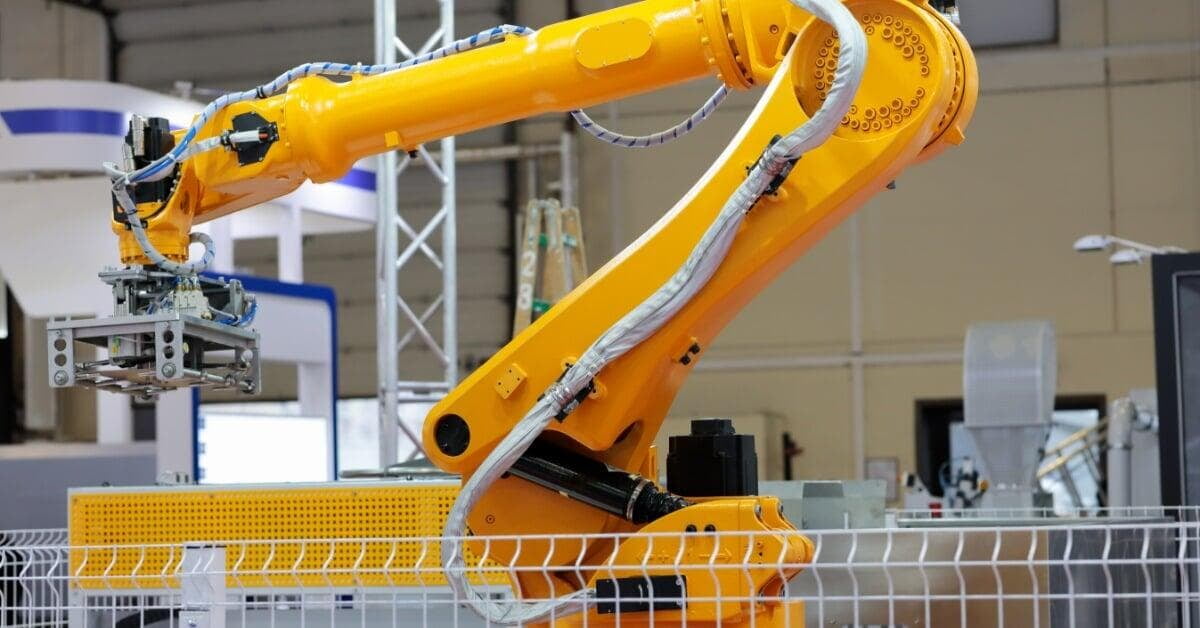
Robotic palletizing systems rely on end-of-arm tooling to secure products during transfer. Vacuum cups, mechanical grippers, and contact pads gradually degrade. A worn gripping surface may lose contact with a case, causing it to shift during movement or land outside its intended position.
Examine accessible gripping components for cracks, surface deterioration, and material buildup while following the equipment's shutdown and energy-isolation procedures. Check that contact surfaces match the product's packaging dimensions and that gripping mechanisms engage consistently. Replace damaged pads or vacuum cups. After maintenance, conduct controlled test cycles to verify that the tooling maintains a secure grip throughout each transfer.
Maintain Consistent Pneumatic Pressure
Pneumatic components power gripping mechanisms and other moving assemblies in many palletizing systems. Fluctuating air pressure may cause delayed cylinder movement, incomplete gripping, or inconsistent product release. These problems can interrupt stacking even when the machine's programmed sequence remains correct.
Monitor the pressure gauge during several operating cycles. Inspect accessible air lines, fittings, and connections for leaks, paying attention to hissing sounds or visible tubing damage. Check air filters and moisture separators for contamination that interferes with airflow. Addressing pressure inconsistencies restores predictable pneumatic movement throughout the palletizing cycle.
Clean and Align Position Sensors
Photoelectric and proximity sensors monitor product movement, pallet placement, and mechanical positions throughout automated palletizing systems. Dust, packaging debris, or shifted mounting brackets may interfere with detection. When a sensor produces an incorrect signal, the machine could fail to recognize the position of a product.
Clean accessible sensor surfaces using the manufacturer's recommended method, then inspect mounting brackets for looseness or damage. Verify alignment with the intended detection point and observe whether the sensor responds consistently as products pass through the system. If detection remains irregular, have qualified personnel inspect the wiring and connections. Reliable sensor feedback maintains accurate coordination between machine movements.
Inspect Drive Components for Mechanical Wear
Motors, belts, chains, and bearings transfer motion through the palletizing equipment. Mechanical wear may introduce vibration, inconsistent movement, or unexpected resistance that interferes with the operating sequence. Changes in sound or movement provide useful indications that a component requires inspection.
During scheduled maintenance, examine accessible belts and chains for damage, looseness, or incorrect tracking. Inspect bearings and moving assemblies for unusual resistance, and check lubrication points according to the manufacturer's service schedule. Qualified technicians should investigate recurring vibration or abnormal motor operation. Routine mechanical inspections maintain consistent movement.
Coordinate Palletizer and Conveyor Speeds
A palletizer must operate in coordination with the equipment delivering products and removing completed loads. If upstream conveyors supply cases beyond the machine's handling capacity, products may accumulate and trigger stoppages. Similarly, delayed discharge of finished pallets prevents the system from continuing production.
Compare actual product arrival rates with the palletizer's operating cycle and the discharge conveyor's capacity. Adjust authorized conveyor settings to maintain a steady flow through the system, then observe whether accumulation occurs at specific transfer points. Avoid increasing palletizer speed until confirming that upstream and downstream equipment can accommodate the change. Balanced equipment timing promotes consistent production throughout the packaging line.
Schedule Preventive Maintenance Based on Operation
Continuous production places substantial demands on palletizing equipment, so maintenance schedules must reflect operating conditions. Machines running multiple shifts may experience component wear at a different rate than equipment operating intermittently. Following a generic maintenance interval without considering actual operating hours may leave developing problems unnoticed.
Establish inspection schedules using manufacturer recommendations, operating hours, and recorded equipment faults. Document recurring stoppages and component replacements to identify patterns that warrant additional attention. Schedule qualified technicians to inspect internal mechanisms, test safety devices, and complete repairs under appropriate energy-isolation procedures. Consistent maintenance planning addresses developing equipment problems before they interrupt scheduled production.
Maintain Reliable Palletizing Performance
Maintaining efficient palletizing systems requires attention to operating accuracy and mechanical condition. Even with routine adjustments, recurring positioning errors or repeated equipment failures may indicate that the current system requires professional service or no longer meets production demands.
PackSmart offers auto palletizer equipment, packaging machinery maintenance, and more. Whether an existing system requires technical attention or an operation needs equipment suited to its production requirements, contact PackSmart to discuss available palletizing solutions and service options.