
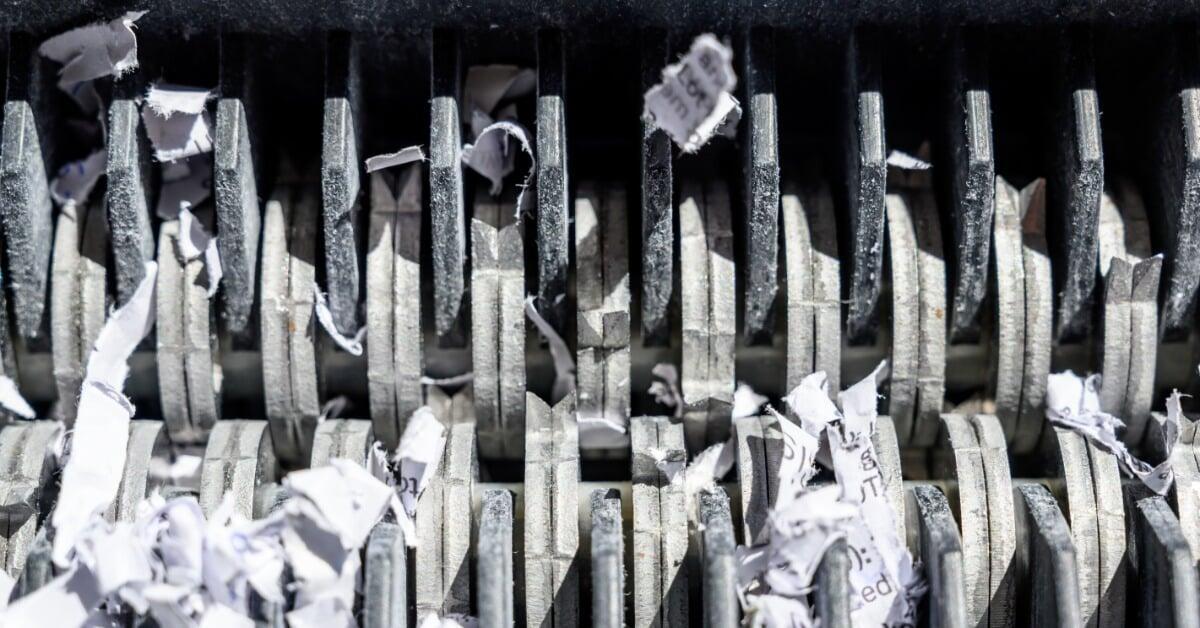
Offices, labs, and industrial floors generate stacks of sensitive documents and media every day, and those materials require secure handling at the end of their lifecycle. Teams face a practical choice at that moment: invest in an industrial shredder or stick with an office shredder. Each path fits a different set of volume, security, and material needs, and a mismatch wastes time and money.
This comparison of industrial and office shredders outlines how each shredder class works, what each machine handles, and where each delivers value. We’ll help you decide which option is right for your workplace.
What Are Industrial Shredders?
Industrial shredders are heavy-duty machines built to handle large volumes of paper and mixed materials with reliable, continuous performance. Some of the common uses for industrial shredders include:
- Banker’s boxes and large stacks of paper
- Thick binders and stapled files
- Cardboard and packaging materials
- Plastics and CDs/DVDs
- Hard drives and other electronic media
An industrial shredder uses hardened steel cutters, powerful motors, and advanced cooling systems to support long, uninterrupted runs. Teams appreciate their reliability when deadlines, compliance windows, and large cleanouts pile up simultaneously.
Pros
High-Capacity Throughput
A heavy-duty industrial shredder can process thousands of sheets per hour, clearing backlogs quickly and efficiently. This massive throughput is a lifesaver during seasonal spikes or urgent compliance audits, keeping your team ahead of deadlines.
Versatile Media Handling
Industrial shredders can process paper, cardboard, plastics, and optical media. With the right cutting head, you can even destroy electronic media like hard drives, making it a flexible solution for all your data destruction needs.
Continuous Operational Power
Robust motors and advanced cooling systems let industrial shredders operate nonstop. You can keep your workflow moving without long cool-down breaks, allowing your crew to finish large cleanouts in ample time.
Advanced Security Standards
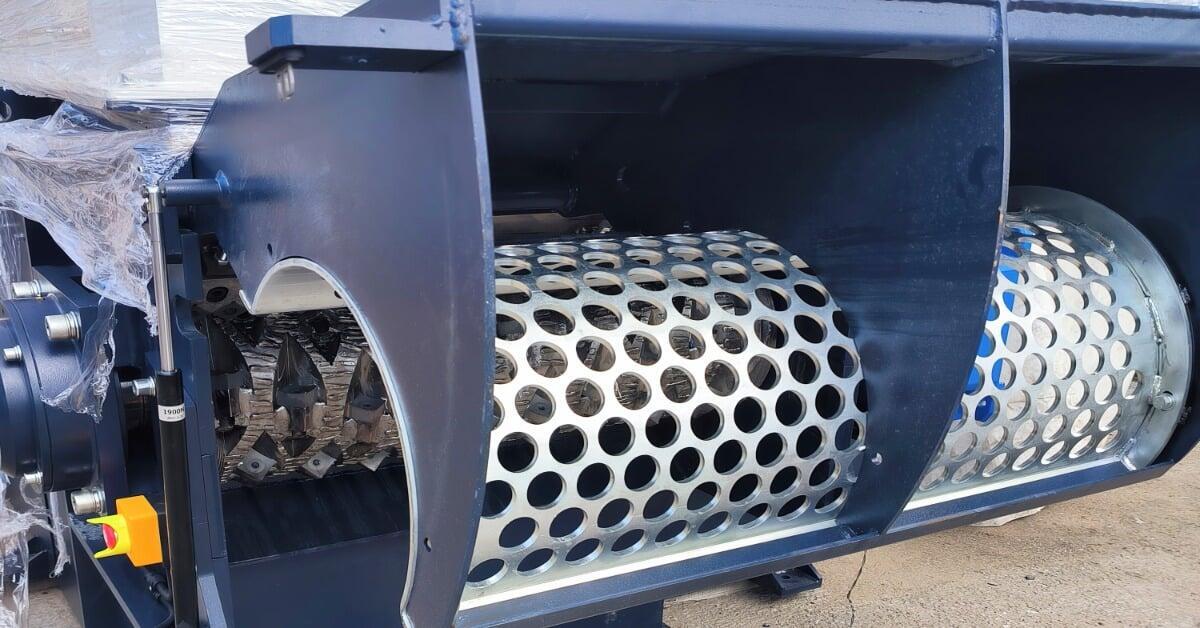
Industrial shredders can reduce paper and media to small, unreadable particles that meet strict security regulations. High-security options protect sensitive client information, financial records, and proprietary data.
Enhanced Labor Efficiency
These shredders handle large volumes quickly, reducing the time staff spend feeding paper, emptying bins, and clearing jams. Faster processing means teams can focus on other tasks, and the cost per pound of shredded material drops.
Cons
Higher Initial Investment
The upfront cost of an industrial shredder is significantly higher than that of a standard office unit. Organizations must plan budgets carefully and justify the expense based on shredding volume, security needs, and long-term efficiency gains. Failing to account for this upfront cost can strain finances or delay other critical investments.
Space and Power Requirements
Industrial shredders are powerful machines that have a large footprint, demanding considerable floor space. You’ll also need to ensure access to reliable power sources and maintain adequate clearances for feeding materials and routine maintenance.
Operator Training
Industrial shredders use powerful motors and sharp cutters that can be dangerous if handled incorrectly. Operators need hands-on training to feed materials safely, clear jams properly, and use safety features like emergency stops. Without proper supervision, misuse can cause injuries or damage the machine.
Increased Energy Consumption
The industrial-grade output is driven by large motors and a heavy-duty cycle, resulting in higher energy consumption and higher costs. Businesses should factor this increased power usage into their overall operating costs.
What Are Office Shredders?
Office shredders serve everyday document disposal inside departments, branches, and classrooms. These machines work well with paper, credit cards, and light media, and some models handle small paper clips or staples. Teams drop a few pages in at a time, empty a bin, and return to regular work without a learning curve.
Generally, small and midsize businesses, administrative teams, and schools use office shredders because they fit tight spaces and simple needs. This type of shredder brings a good balance of convenience, noise levels that suit shared environments, and an approachable price. Quick maintenance keeps them running, and basic features like auto-start and reverse help users stay productive.
Pros
Low Cost of Ownership
Office shredders cost less upfront than industrial models and require minimal maintenance, reducing ongoing expenses. Energy-efficient motors and automatic sleep modes reduce electricity use, lowering utility bills. Over time, this combination helps offices manage shredding without straining the budget.
Compact, Space-Saving Design
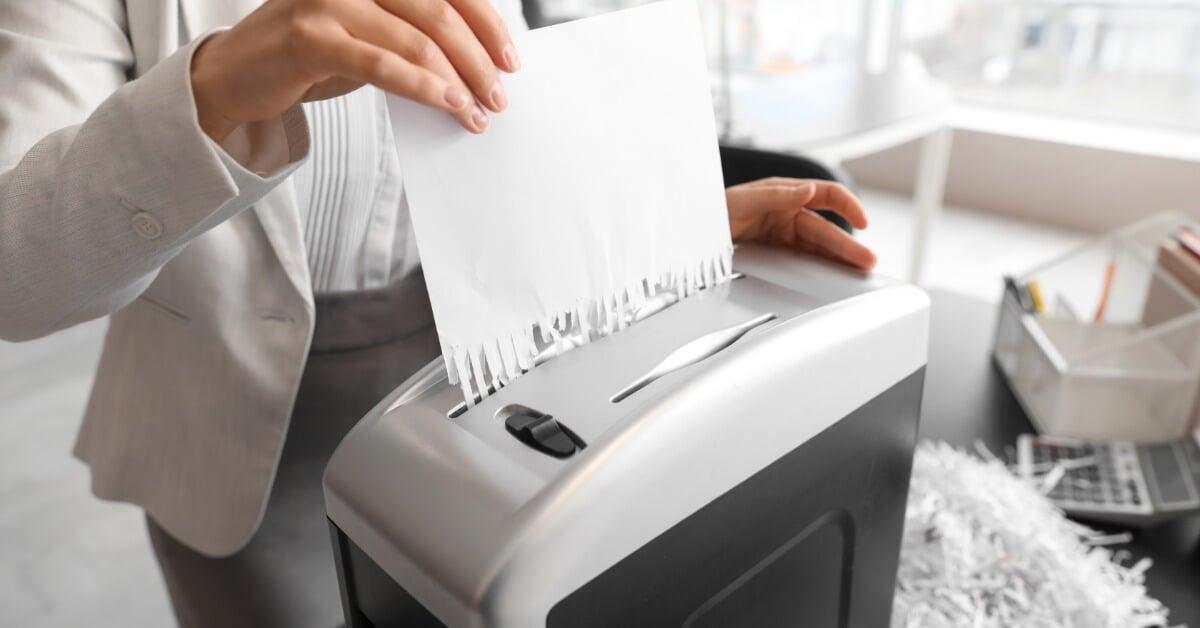
With a compact footprint, these machines easily fit under a desk or beside a shared printer. Their space-efficient design makes them ideal for small offices or shared work areas where every inch counts.
User-Friendly Operation
Simple controls, including auto-start and reverse, let new users begin shredding right away. The intuitive design reduces mistakes and keeps the workflow smooth, even for those with no prior experience.
Quiet Performance.
Designed for shared environments, these shredders operate quietly to preserve focus in conference rooms and open offices. Likewise, their low noise levels ensure that shredding tasks don’t disrupt nearby colleagues.
Cons
Lower Sheet Capacity
Office shredders can only handle small stacks at a time, creating bottlenecks during busy periods. Likewise, staff may need to feed paper repeatedly, slowing the overall workflow and diverting time from other important tasks.
Slower Throughput
Slower processing speeds lengthen the time required to handle boxes or file purges. When speed is a priority, these machines may struggle to keep up with demanding office schedules.
Cool-Down Requirements
Small motors and limited cooling systems require periodic cool-down periods during long sessions. This can be frustrating when you have a large volume of shredding to complete in one sitting.
Limited Media Flexibility
Media flexibility remains narrow, often excluding thick binders, cardboard, and electronic media. If your office needs to destroy more than just paper, these basic models may fall short.
What Factors To Consider Before Choosing
When comparing industrial and office shredders, the most important thing is to decide what’s best for your business. This means evaluating your budget, typical shredding volume, the type of materials you need to shred, and how much space you have. Below, we’ve detailed everything you should consider.
Shredding Volume
Volume is a critical factor in your decision. Instead of looking at a single day, estimate your weekly and monthly loads, including annual spikes like quarter-end purges or archival cleanouts. High-volume environments derive the most value from industrial units because they clear backlogs quickly and keep pace during peak periods.
Type of Materials
The materials you destroy will dictate the machine class you need. Paper-only workflows are a great fit for office shredders, especially for lightweight tasks near a desk. However, if your workplace involves mixed media—like cardboard, plastics, optical discs, or hard drives—you’ll need industrial-grade power. If your team handles thick binders or stapled files daily, an industrial option is essential to avoid constant jams and wear.
Space and Logistics
Available space often tips the scales. Beyond the machine’s footprint, you need to measure electrical access and material flow paths. Where will pallets or bins sit during the feed and empty cycles? Office models tuck easily into small zones, whereas industrial machines require staging space for carts, bins, or conveyors, plus extra room for servicing.
Order Quality Shredders
PackSmart helps businesses streamline their packaging and equipment needs, including industrial shredding solutions that support efficient waste management and secure data destruction. Whether you’re outfitting a warehouse or office space, PackSmart connects you with the right machinery to match your workflow and security requirements.