
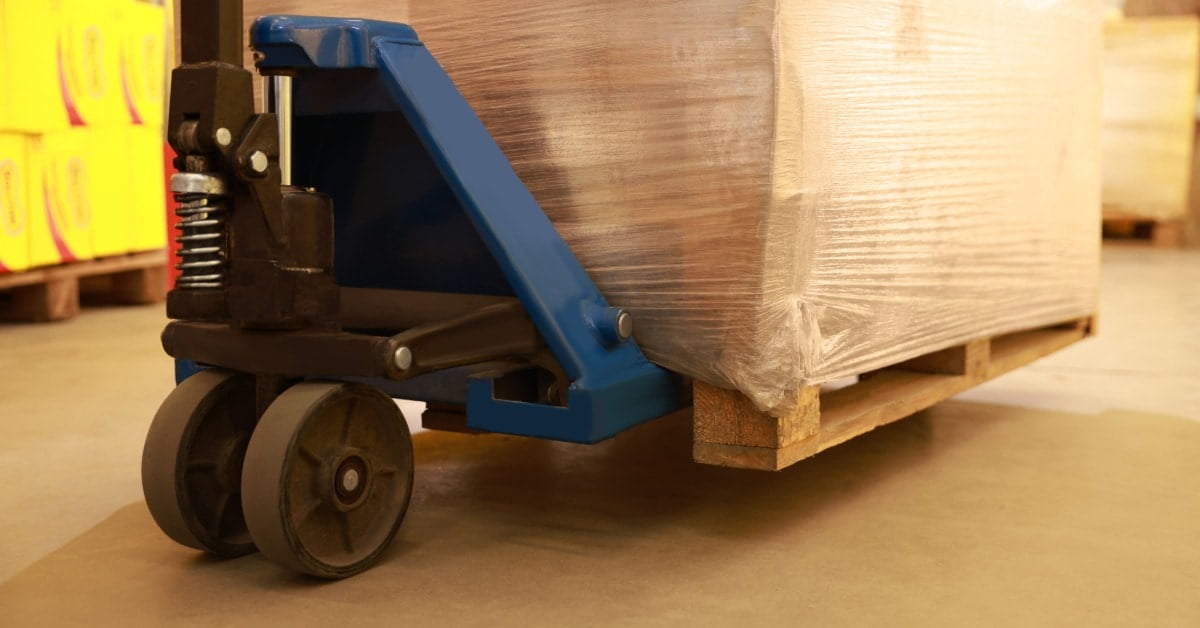
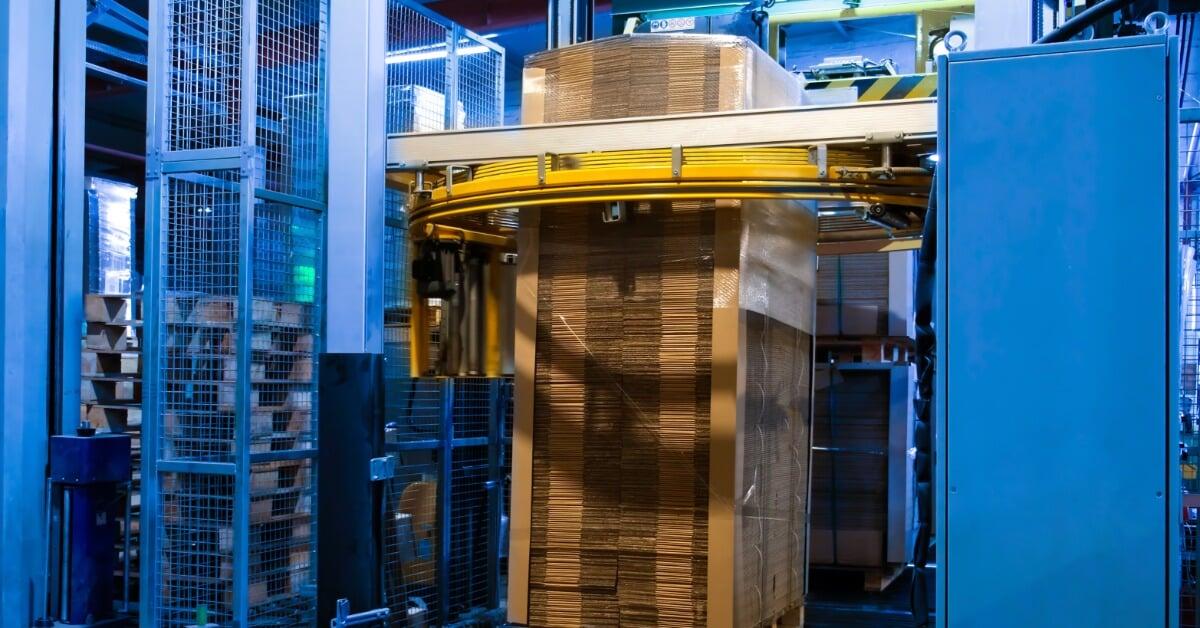
Stretch wrapping machines apply thin elastic plastic film around a palletized load. A turntable or rotating arm moves the load in relation to a film carriage, and the carriage travels vertically to place overlapping layers from the pallet base to the top. The film stretches and pulls inward after the carriage releases each layer.
Warehouse teams use this equipment to prepare stable loads before storage or shipment. A controlled cycle places film with repeatable tension and coverage across every side of the pallet. As a result, stretch wrapping reduces product damage by limiting movement and protecting vulnerable surfaces. Each part of the wrapping pattern contributes to the load’s condition after forklift handling and trailer transport across a distribution network.
Consistent Tension Controls Load Movement
A stretch wrapper uses programmed force to keep film tension steady throughout upward and downward passes. Consistent tension draws neighboring cartons together so gaps don’t widen as the pallet moves. Loose sections let individual packages shift against nearby products during acceleration or braking across docks and roadways. Those small movements crush corners and weaken an entire stack over time.
Containment force describes the pressure wrapped film places around a load. The proper amount depends on product weight and carton strength across the stacked footprint. Dense loads depend on enough force to resist movement during transport. Light or compressible products call for gentle pressure, so the film secures them without distortion.
Film Overlap Closes Weak Areas
Every rotation places a horizontal band of film around the load. Meanwhile, the carriage moves upward or downward at a programmed speed. The relationship between those movements determines how much each band overlaps the previous layer. Adequate overlap forms continuous coverage around corners instead of leaving narrow sections with limited support.
Weak areas tend to develop near load transitions or uneven carton edges where film changes direction. A machine maintains its wrapping pattern through those changes and avoids large gaps between passes. Programmed top and bottom wrap counts add reinforcement near areas exposed to the most movement. Therefore, the load receives support across its full height instead of only around the middle.
Pallet Bonding Prevents Base Separation
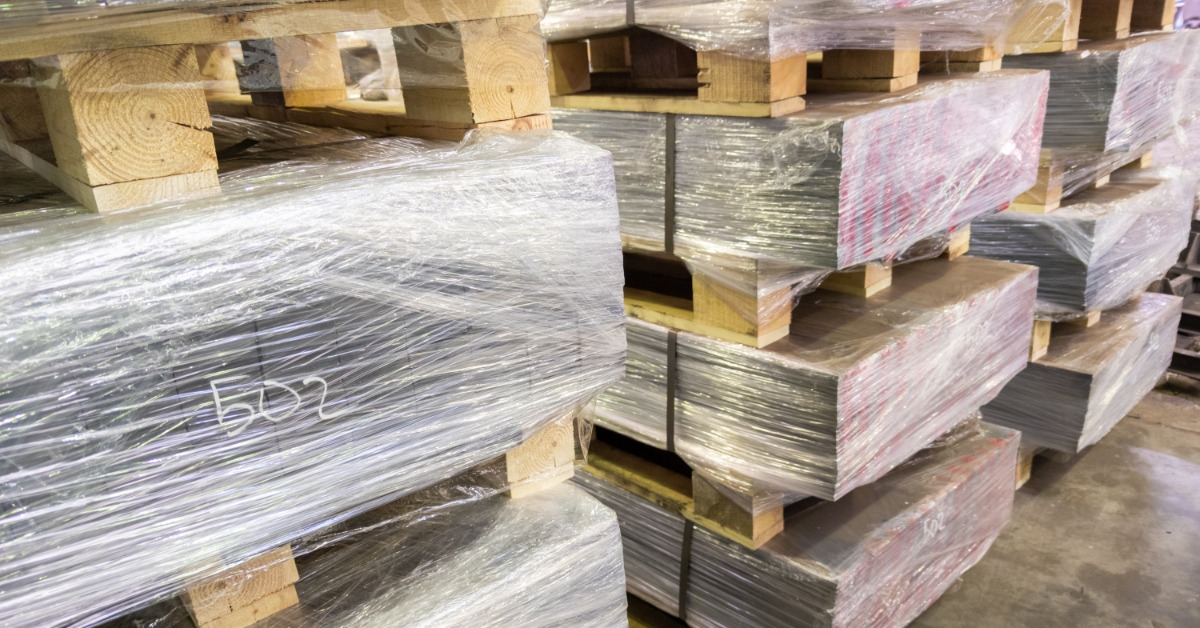
Cartons sometimes remain tightly grouped yet slide across the pallet deck because the wrap never secures them to the base. Stretch wrappers address this risk by placing several film layers near the bottom of the load before continuing upward. Those layers establish a bond between the products and pallet. The bond limits sideways movement as forklifts turn or trailers change speed during cornering.
A secure base supports the upper layers because the entire stack moves as one unit. However, the wrapping pattern must preserve access to fork openings and avoid loose film beneath the pallet. Operators confirm bottom wraps grip the load and pallet in the intended area. A stable foundation prevents movement from traveling upward through the stack.
Controlled Force Protects Fragile Packaging
Additional tension doesn’t always produce safe packaging. Excessive force bows corrugated panels or crushes lightweight cartons. The same pressure deforms bagged products and stresses sharp package edges. Conversely, loose film offers little resistance once the load shifts.
Machine settings let operators match film force to the product instead of using one pattern across every pallet. Operators set wrap force and rotation count based on load behavior. Next, they adjust carriage speed to change film overlap, ensuring that the load is secure and maintains its shape.
Stable Loads Resist Transit Forces
Pallets face repeated forces after they leave the wrapping station. Forklift turns and dock impacts push products sideways, while vibration from trailers gradually introduces spaces between the cartons. While stretch wrap doesn’t replace a sound pallet pattern or internal cushioning, it preserves the original stacking pattern.
Stretch film holds separate packages in a cohesive unit, so they don’t respond independently to each movement. The shared support limits leaning and edge collapse during repeated handling events.
Stationary Wrapping Limits Rotational Stress
Some pallet loads shouldn’t rotate during wrapping. Tall stacks and light products might lean as a turntable accelerates through the wrapping cycle. Unstable loads face a similar risk because rotation magnifies existing movement. In these cases, a rotary-arm machine holds the pallet stationary as the arm carries film around it.
The stationary process limits rotational stress as the machine maintains controlled film placement. Heavy loads resist rotation under turntable motion, and fragile loads have limited structural strength. Equipment choice must follow the load’s weight and stability instead of production speed alone. Matching machine motion to load behavior protects products during the wrapping cycle itself.
Full Coverage Shields Product Surfaces
Stretch film forms a barrier around exposed cartons during staging and transit. Complete coverage limits contact with dust and light moisture. It separates printed surfaces from nearby pallets or warehouse structures. The separation decreases scuffing and preserves label readability through repeated handling in staging lanes.
Stretch film isn’t a waterproof shipping container, so warehouses must consider the level of exposure each load faces. A top sheet adds protection across the upper surface during overhead dust or moisture exposure. Film selection has an equal effect because sharp edges might puncture thin material. With sufficient coverage, the products will remain in good condition.
Repeatable Cycles Limit Packaging Variation
Manual wrapping quality changes with operator technique and fatigue. A machine follows the same programmed cycle across similar loads. Repeatable performance limits loose bands and missed sections during busy shifts and peak outbound periods. Repeatability makes changes in wrap quality easy to identify because the standard is consistent from one pallet to the next across shifts.
It’s essential for team members to inspect film tails, exposed corners, and leaning cartons. A machine can’t stabilize a damaged pallet or poorly stacked products, so inspection remains part of effective damage prevention.
Reliable Wrapping Protects Outbound Loads
A controlled wrapping cycle combines steady tension with complete coverage. It secures products to the pallet and protects package surfaces from routine warehouse exposure. Through these connected functions, stretch wrapping reduces product damage before a load reaches the dock.
PackSmart provides industrial stretch wrap machines. Contact our team today to find a semi-automatic or fully-automatic machine that will secure the products moving through the facility.